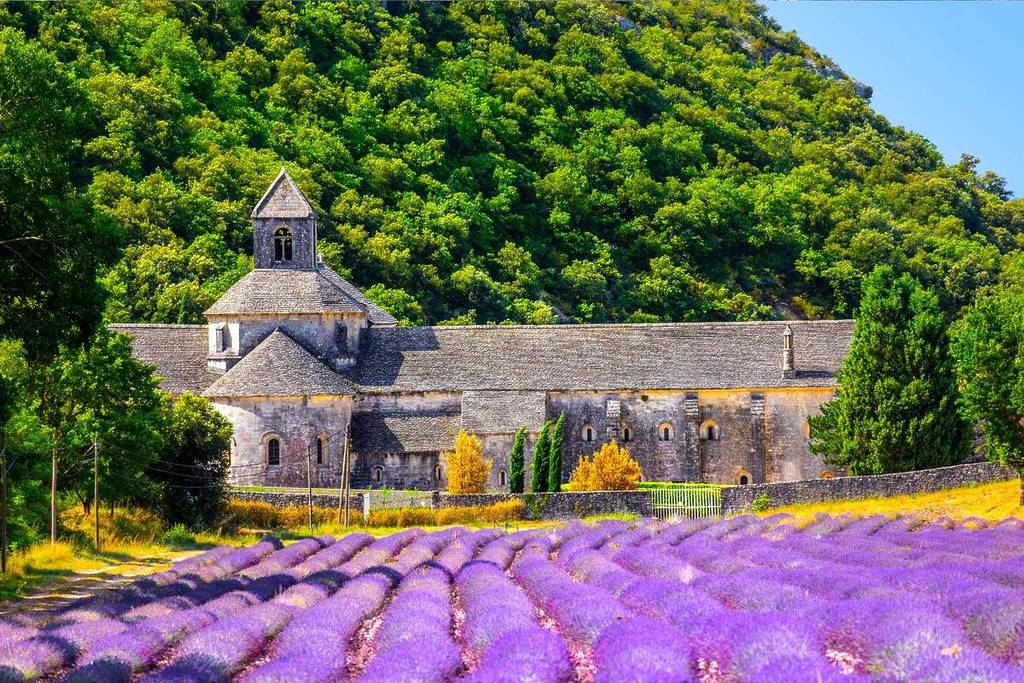

Heather in autumn, mimosas in winter, cherry blossoms and tulips in spring… Provence never fails to charm us with its beautiful blooms all year round. A constant interplay of scents and colors, with lavender remaining the region’s must-see attraction. From the Valensole plateaus to Terre Ugo, fragrant walking trails abound all summer long. With a charm that is both Provençal and solemn, the lavender fields ofthe Abbey of Notre-Dame de Sénanque offer an extraordinary floral getaway. Just 1.5 hours from Marseille, discover this striking place, where spirituality meets a unique spectacle.
A Cistercian abbey amidst the lavender
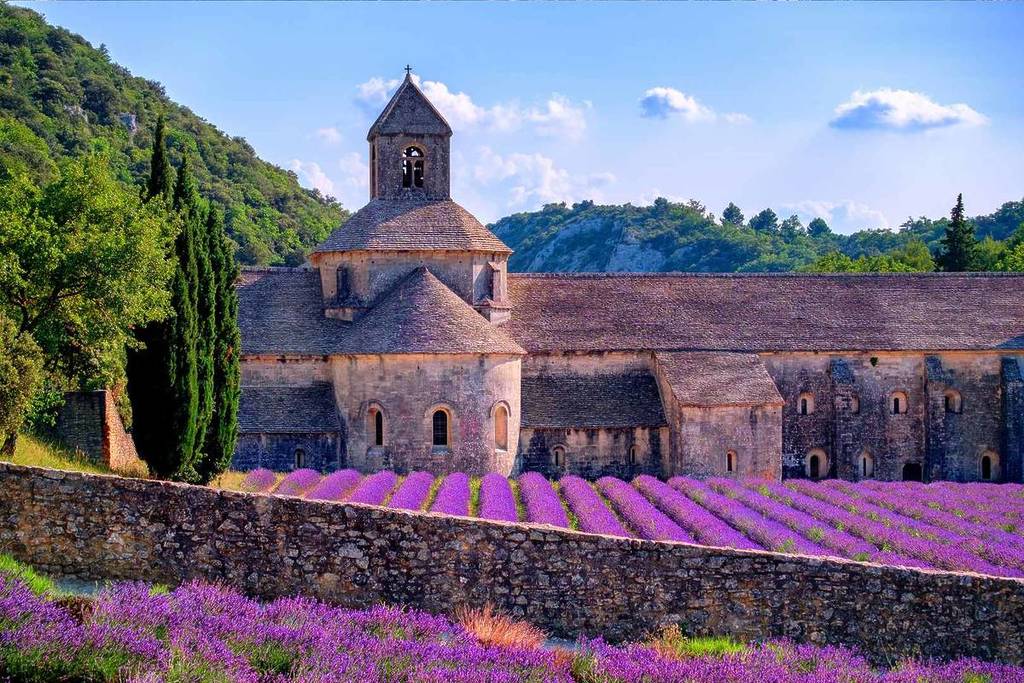
Just off a small road in the Luberon near Gordes,the Abbey of Notre-Dame de Sénanque appears almost by surprise. Nestled at the bottom of a green valley, it seems protected from the world by the surrounding hills. Yet this 12th-century Cistercian abbey is one of Provence’s most iconic landmarks.
But what strikes you most in the heart of summer are its lavender fields. A multitude of purple rows surround the light-stone buildings that blend seamlessly into the landscape. Cultivated and harvested by the abbey’s monks, the flowers are used to produce essential oils, honey, and other specialties sold on site.
This postcard-perfect setting exudes a striking harmony and a sense of peace. For, true to the principles of the Cistercian order, the monks designed a place centered on simplicity. The church, the cloister, the chapter house, and the former dormitories still bear witness today to this rigorous organization. The tour thus offers a glimpse into monastic daily life and the close bond that has united this place with its surroundings for over eight centuries.
Over 800 years of history
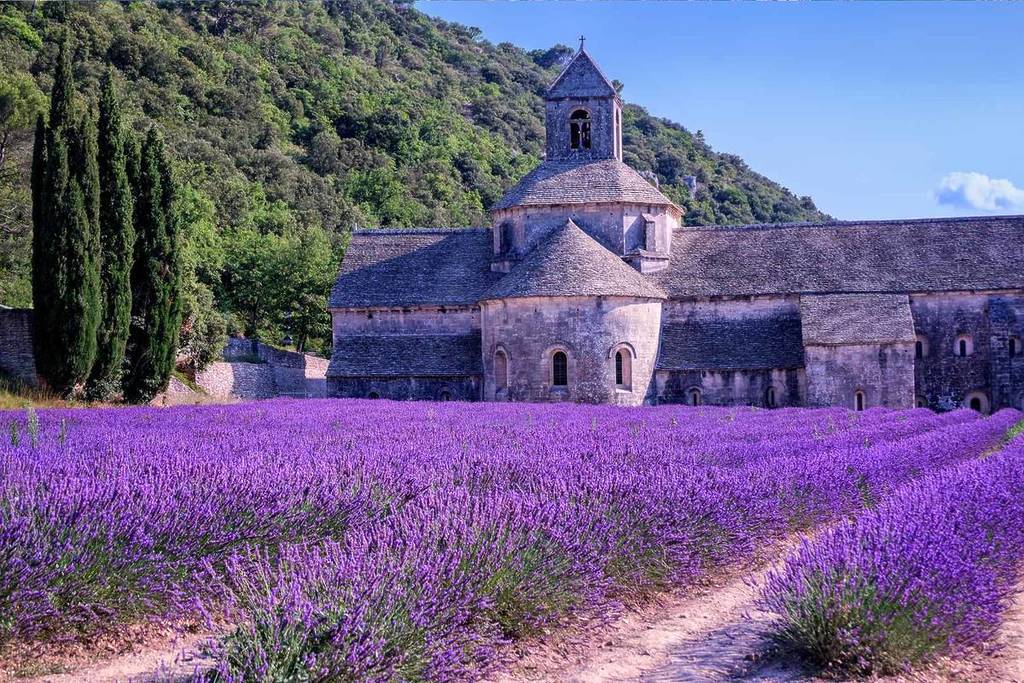
The history ofthe Abbey of Notre-Dame de Sénanque began in 1148 when Cistercian monks from the Ardèche chose this isolated valley to found an abbey. The site perfectly met the order’s requirements: distance from towns, access to water, and sufficient resources to live self-sufficiently.
After several decades of construction, the abbey became one of the most important Cistercian communities in Provence. But the following centuries were marked by wars, epidemics, and political upheavals. Like many religious buildings, Sénanque was sold during the French Revolution and lost its monastic function. Used for a time for agricultural purposes, it nevertheless escaped destruction.
Starting in the 19th century, several restoration campaigns helped save the monument. A community of monks gradually resettled there and continues to uphold the Cistercian tradition to this day.
Practical information:
📍Sénanque Abbey, 84220 Gordes
🌿Lavender bloom: between May and July, depending on the season