It all began in 1850, at the end of the 19th century, when Napoleon III ordered the construction of the Palais du Pharo. Its location allows it to dominate the Mediterranean Sea, and it is this imperial residence that sailors see first when they arrive in Marseille by water. We invite you to discover the secrets of the Palais du Pharo, a must-see monument in the city of Marseille.
Table Of Contents
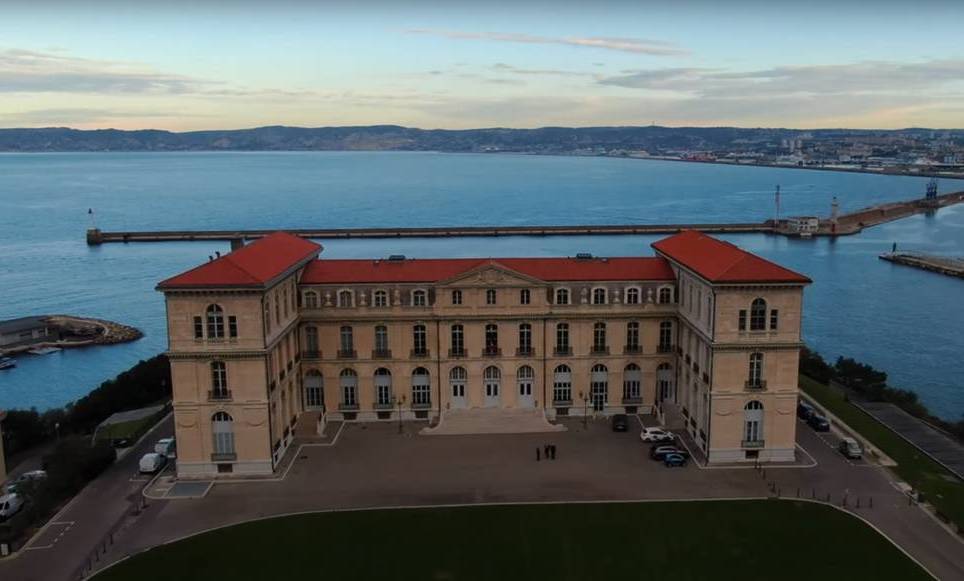 Photo credit: Bertrand de Beuvron on Wikimedia Commons
A little history about the Palais du Pharo
Built as the residence of Napoleon III and his wife Eugénie, the imperial residence served this purpose until the fall of the Empire in 1870 (when construction of the palace was completed). Napoleon III died in 1873 and his wife was forced to hand over the residence to the city of Marseille. Until the end of the 19th century , the Palais du Pharo was converted into a hospital, then in 1890 the faculty of medicine moved in . In 1905, the Institute of Tropical Medicine of the Armed Forces Health Service took its place. After its many lives, the Palace is now a conference center, where concerts are also held, notably those of the Marseille Opera.
What can you do there?
The Palais du Pharo, located at the entrance to Marseille’s Old Port, is both an iconic landmark and a popular place to stroll. Its large park, which is freely accessible, offers one of the most beautiful views of the harbor and is an ideal place to walk, picnic, or watch the sunset. The building itself is not open to the public, as it now mainly hosts conferences, conventions, and professional events. However, it is possible to enter during events open to the public, which are organized periodically throughout the year. For example, Candlelight concerts allow you to admire the interior while enjoying the soft sounds of live music.
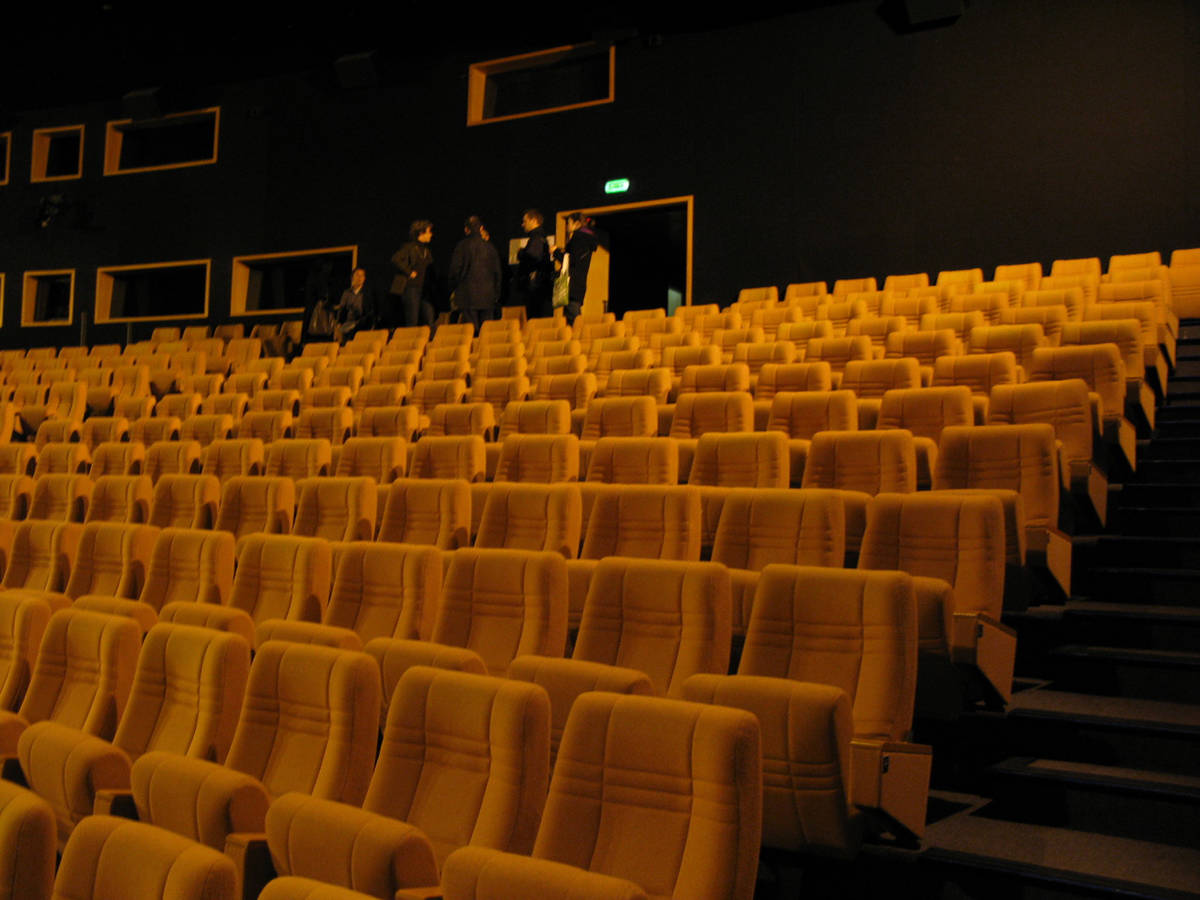 Photo credit: liftconferencephotos on Wikimedia Commons
A few anecdotes and curiosities
Another iconic place that Marseille owes to Napoleon III!
You don’t have to dig very deep to discover that Louis Napoleon Bonaparte (aka Emperor Napoleon III) was behind the renovation or construction of many important buildings in Marseille. Among them are the Port de la Joliette, the Hôtel Dieu, and the Palais de la Bourse! Well, with the many projects he had undertaken in Marseille, he visited the city very often and wanted to build a residence there close to the Mediterranean. To thank him, the city of Marseille acquired the land on the Pharo plateau and offered it to him in 1855.
The Palais du Pharo, a name inherited from the maritime world
You don’t have to look very far to understand the origin of the name “Pharo”. In fact, the palace takes its name from the hill on which it stands. On this hill, called “farot,” there was a lookout facing the sea. Hill, sea, lookout, boats… It’s worth noting thatthe word “phare” (lighthouse) comes fromthe Latin word “pharus,”which was derivedfrom“faro”! This etymology makes perfect sense when you see the ideal location of the Palais du Pharo!
The architects’ ball…
The first architect commissioned to design the Palais du Pharo was the Swiss Samuel Vaucher. He chose the Teste More (skull) promontory, which overlooks the entrance to the port and offers a sublime view of the Marseille coastline. But problems soon arose. In 1853, he presented the plans to Napoleon III. Not very satisfied, the latter had them corrected by the architect Hector-Martin Lefuel, and it would be five years before the first stone was laid. As the land was crater-shaped, a lot of leveling work had to be done (bam, more delays). At the same time as the palace was being built, the Major Cathedral was also under construction, and the lack of stones to supply it created a further slowdown for the Palais du Pharo. Samuel Vaucher was held responsible and fired from the project!
His connection to the Louvre, the Tuileries, and the Bonne Mère
We mentioned the architect Hector-Martin Lefuel earlier , and in addition to supervising the plans for the Palais du Pharo, he was also responsible for the Louvre Museum and theTuileries Palace in Paris. Another famous architect in Marseille also participated in the project to replace Samuel Vaucher: Henri-Jacques Espérandieu. Among his well-known monuments, he designed none other than (among others) the Basilica of Notre-Dame de la Garde!
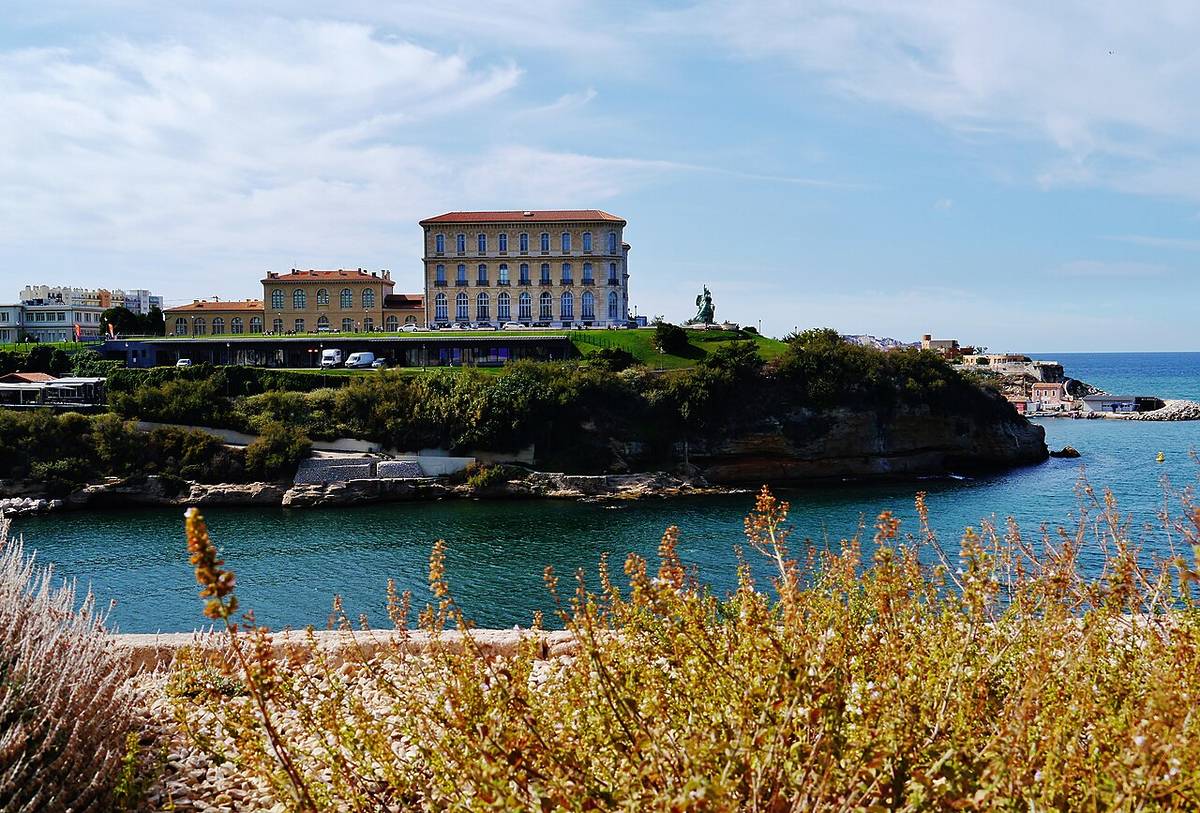 Photo credit: Zairon on Wikimedia Commons
Where is the Palais du Pharo and how do you get there?
It is located at the end of Marseille’s Old Port on a promontory offering a panoramic view of the sea, Fort Saint-Jean, and the Mucem, in the 7th arrondissement, a few minutes’ walk from the city center. To get there, you can easily take the bus (several lines serve the “Pharo” stop), walk from the Old Port along the quay (about 15 to 20 minutes), or come by car (parking is available nearby). It is a location that is both central and slightly secluded, giving it the impression of being suspended between the city and the Mediterranean.