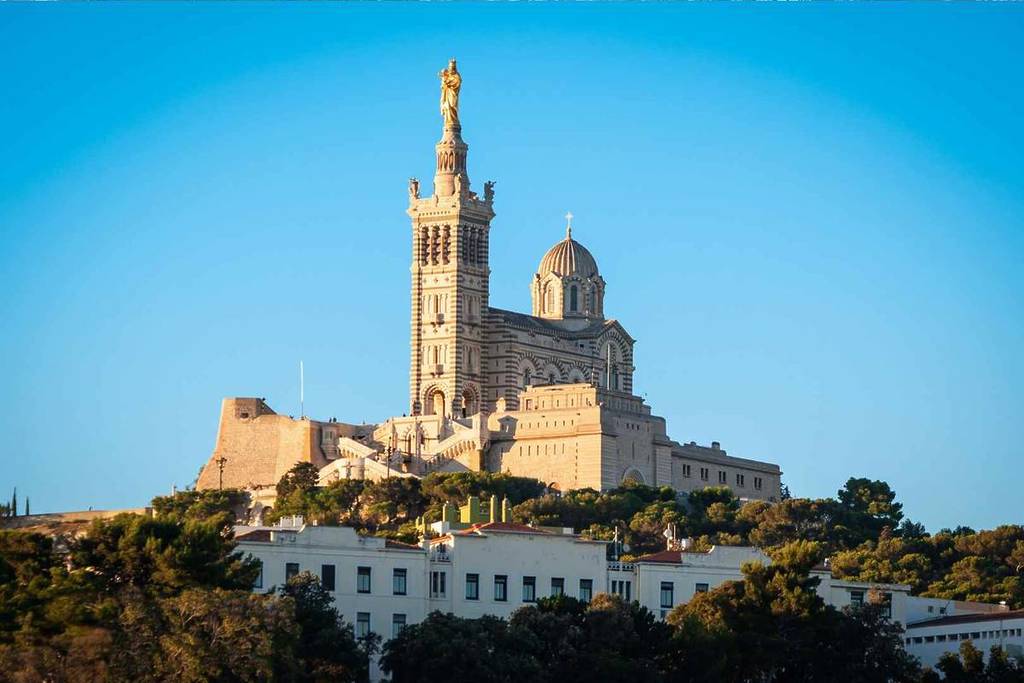

A true sentinel of the Phocaean city, the Basilica of Notre-Dame de la Garde is much more than a religious monument: it is the heartbeat of Marseille. While its Byzantine silhouette is known throughout the world, its walls and hill hide surprising stories. Here are 5 secrets to impress during your next climb up “the Hill.”
1. Three men, a usurpation, and three iconic buildings in Marseille
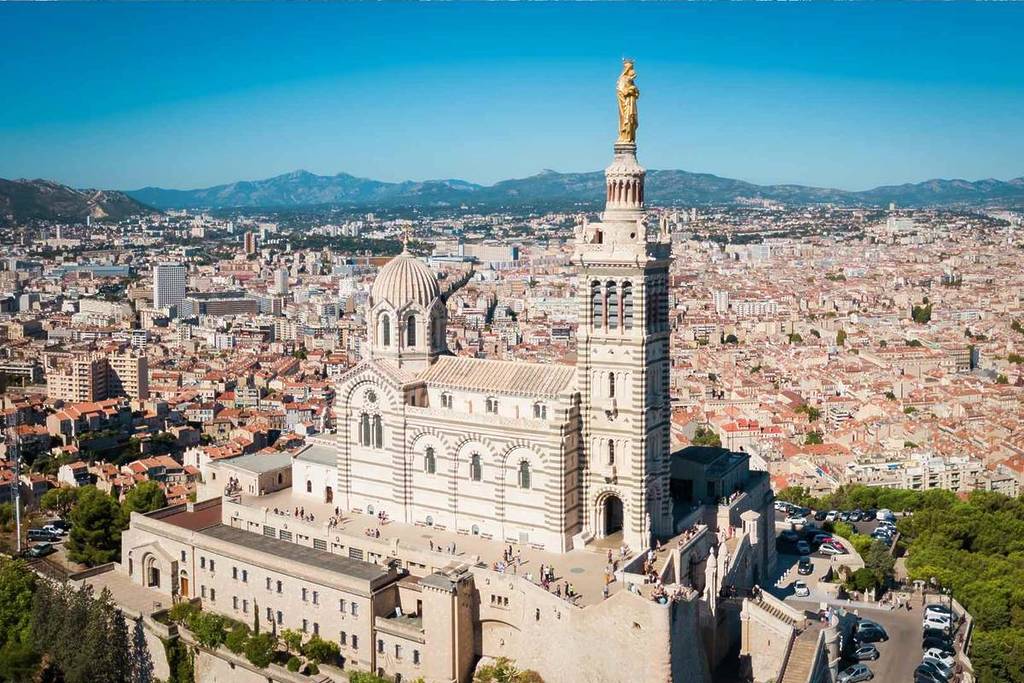
The history of the Basilica is linked to an incredible imbroglio. It all began in 1214 when a priest named Pierre built a small sanctuary in honor of the Virgin Mary. However, it wasn’t until 1853 that this place of worship was expanded and transformed into a Basilica. The architect behind this project? Henri-Jacques Espérandieu, who also designed the Major Cathedral and the Longchamp Palace.
The paradox is striking: although he designed the most iconic monument of Marseille’s Catholic heritage, Espérandieu was in fact a Protestant. Because of his young age and his faith, public rumor long attributed his masterpiece to his mentor, Léon Vaudoyer. It would take many years for the talent of this prodigy from Nîmes to be officially recognized and for his name to finally be etched into the site’s history.
2. A military fort turned royal prison
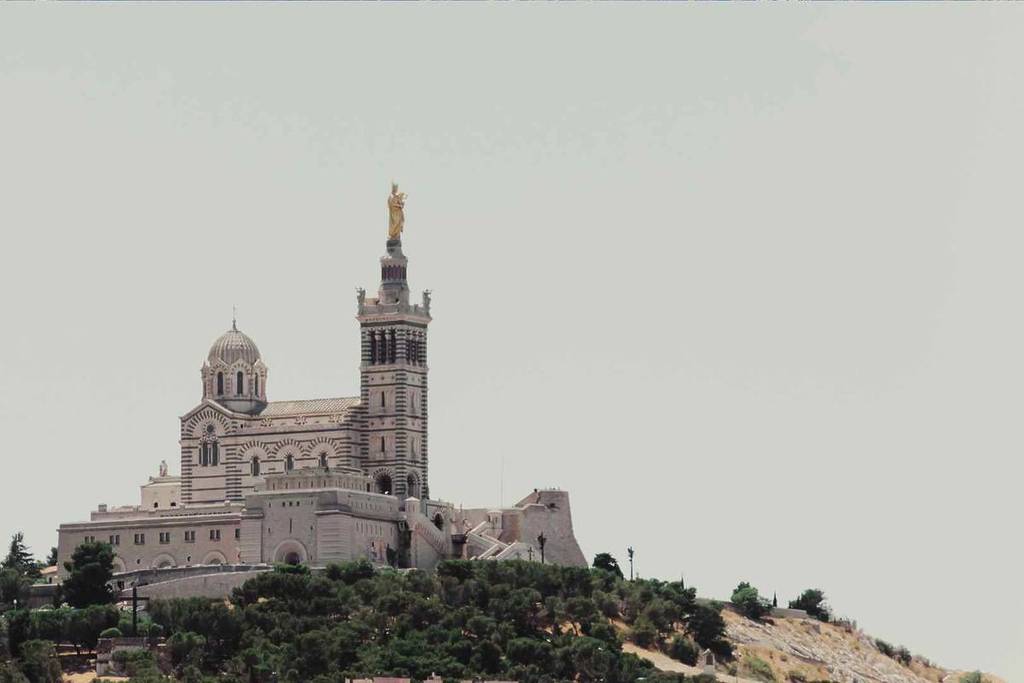
A very modest chapel in 1214, it subsequently experienced a much more eventful fate. In the 16th century, Francis I realized that Marseille was vulnerable to maritime threats. He therefore ordered the construction of a fortress on La Garde Hill. The small chapel remains at its center.
During the Revolution, the site’s fate took a dramatic turn. The small medieval chapel was converted into a prison for members of the Bourbon family. It notably housed the Duke of Orléans and his sons before their transfer to the dungeons of Fort Saint-Jean.
3. “It’s so I can see you better, my child”

At the summit of the Notre-Dame de la Garde Basilica, a statue of the Virgin and Child has stood proudly since 1870. It is this statue that the people of Marseille affectionately call “la Bonne Mère.” The statue stands 11.20 meters tall and weighs over 9,000 kilograms. Its summit is nearly 226 meters above sea level, and it requires 500 grams of gold to be gilded every 25 years! About thirty years ago, an unusual anecdote tells of a spiral staircase hidden inside the structure itself. This staircase reportedly allowed access to the Virgin’s head, enabling one to see through the eyes of the Bonne Mère.
4. A refuge for souls and a sanctuary for sailors
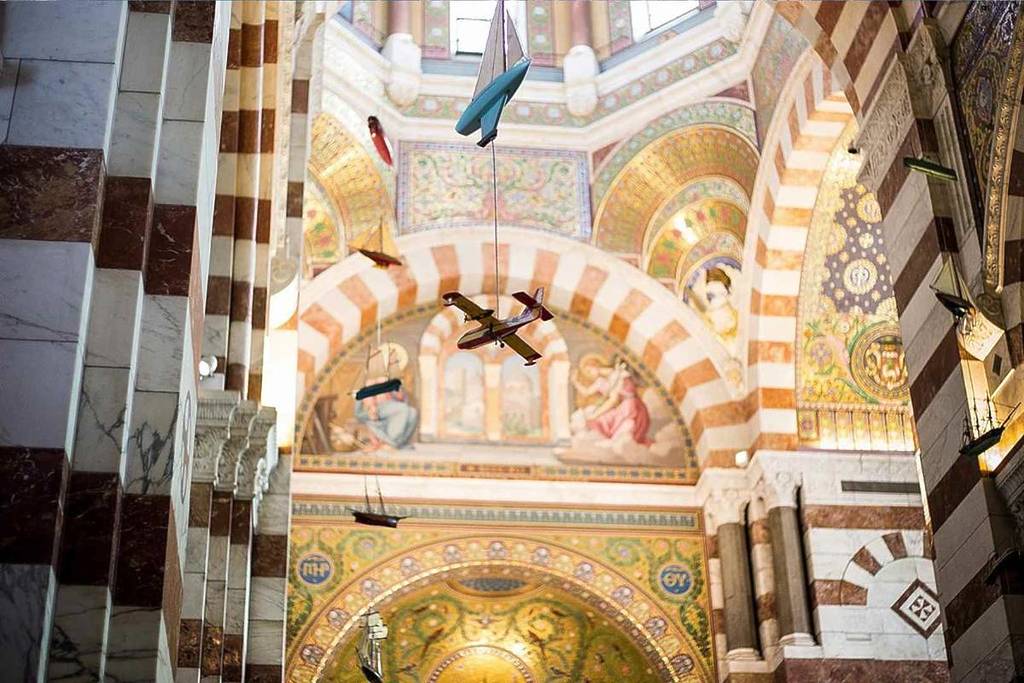
The devotion surrounding the Bonne Mère was forged during the city’s health crises. She was the last bastion against despair during major epidemics, receiving the prayers of those stricken with cholera in 1884, and later those affected by the Spanish flu.
But its most visceral connection remains with the world of the sea. Upon entering the nave, one need only look up to understand this devotion. Dozens of model ships and paintings, known as ex-votos, hang as tokens of gratitude. Each object tells the story of a sailor saved by a miracle or a storm weathered under the Virgin’s protection.
The Lost Funicular: The Elevator to the Sky
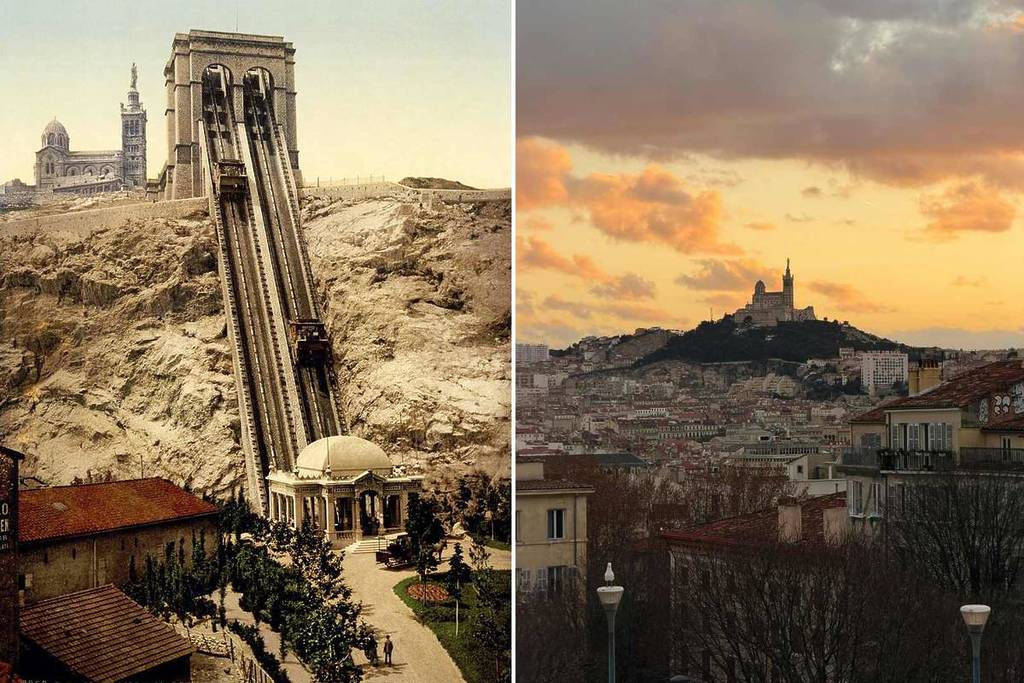
Before buses and cars took over the hill, the people of Marseille climbed aboard a funicular inaugurated in 1892. Nicknamed “the elevator, ” this technical marvel departed from Rue du Dragon to drop visitors off directly on the basilica’s terrace. A victim of modernization and the rise of the automobile, it made its final trip in 1967. Today, only a few metal remnants of this structure remain. But the memory of this vertical journey remains etched in the collective memory of the old neighborhoods.